
|
Getting your Trinity Audio player ready...
|
However, with every new device comes an old one that must be handled responsibly. Unfortunately, many organisations still treat discarded electronics as an afterthought. In reality, structured e-waste recycling is no longer optional; it is a strategic necessity.
Forward-thinking businesses understand that strong e-waste management practices protect the environment, reduce risk, and strengthen brand reputation. With the right systems in place and expert partners like Gauvin’s Green Recycling, companies can transform electronic waste from a liability into a measurable sustainability advantage.
Table of Contents
ToggleRecognizing E-Waste as a Strategic Business Issue
First and foremost, organisations must shift their mindset. Electronic waste is not just operational clutter; it is a compliance, security, and sustainability concern. Devices such as servers, laptops, printers, and networking equipment contain hazardous materials that can harm ecosystems if disposed of improperly.
At the same time, these devices also contain valuable metals and reusable components. Through effective e-waste recycling, companies recover resources while preventing environmental damage. Therefore, strategic e-waste management contributes directly to both environmental responsibility and financial efficiency.
Establishing a Formal E-Waste Management Policy
To ensure accountability, companies should create a documented e-waste management policy. This policy should clearly define responsibilities, procedures for disposal, and approved recycling partners. Without formal guidelines, employees may unknowingly discard devices through informal or unsafe channels.
Moreover, a structured policy demonstrates corporate responsibility. Investors, regulators, and customers increasingly expect transparency in environmental practices. By embedding e-waste recycling into official company operations, businesses build long-term trust and regulatory resilience.
Conducting Regular IT Asset Audits
Visibility is the foundation of effective e-waste management. Companies must regularly audit their IT inventory to identify outdated or unused equipment. When organisations maintain accurate records, they can plan recycling schedules proactively rather than reactively.
Additionally, audits reduce unnecessary storage costs. Many businesses accumulate old devices in storage rooms, creating hidden environmental risks. Through planned e-waste recycling, companies maintain cleaner workspaces and streamline operational efficiency.
Prioritizing Secure Data Destruction
Data security remains one of the most critical aspects of e-waste recycling. Electronic devices store sensitive business information, including financial records, employee data, and confidential communications. If these devices are not properly wiped, companies face serious security threats.
Therefore, secure data destruction must be integrated into e-waste management protocols. Partnering with trusted providers like Gauvin’s Green Recycling ensures certified data erasure or physical destruction. As a result, organisations protect their information while fulfilling environmental responsibilities.
Partnering with Certified Recycling Experts
Not all recyclers follow responsible practices. Consequently, companies must collaborate with certified and authorised e-waste recycling providers. Certification ensures compliance with environmental laws and proper handling of hazardous materials.
Furthermore, professional recyclers provide documentation and recycling certificates. These records support sustainability reporting and regulatory compliance. Gauvin’s Green Recycling offers transparent processes that strengthen corporate confidence in their e-waste management systems.
Implementing Structured Collection Systems
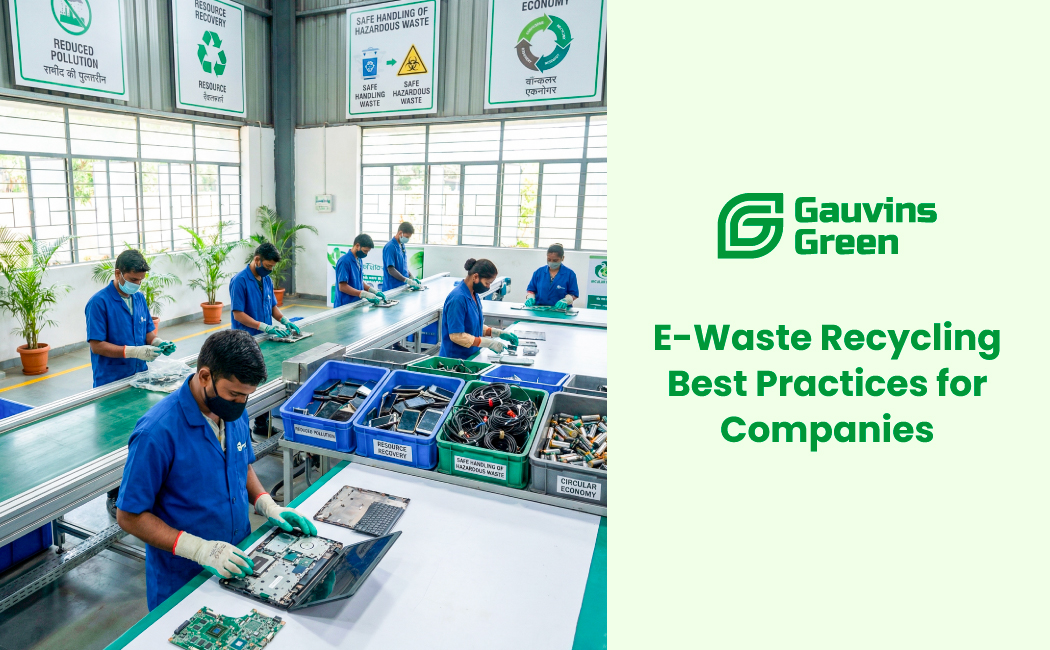
Convenience drives participation. Therefore, companies should establish centralised collection points for outdated electronics. Scheduled pickup services also encourage responsible disposal among employees.
Structured systems reduce informal dumping and improve overall recycling efficiency. By simplifying e-waste recycling procedures, organisations ensure consistent adherence to e-waste management policies across departments.
Educating Employees on Responsible Disposal
Policies alone are not enough. Employees must understand why e-waste recycling matters and how they contribute to sustainability goals. Regular training sessions increase awareness about environmental impact and proper disposal methods.
Additionally, education fosters accountability. When staff members recognise the importance of structured e-waste management, they follow procedures more diligently. Over time, sustainability becomes embedded in company culture.
Integrating E-Waste Recycling into ESG Strategy
Environmental, Social, and Governance (ESG) reporting is now central to corporate performance evaluation. Integrating e-waste recycling into ESG frameworks strengthens sustainability metrics and stakeholder confidence.
For example, companies can track annual recycling volumes or measure reductions in landfill waste. By highlighting e-waste management achievements in sustainability reports, businesses demonstrate measurable environmental progress and align with global standards.
Adopting Circular Economy Principles
Rather than viewing disposal as the final stage, companies should embrace lifecycle thinking. Procurement strategies can prioritize durable and repairable devices to minimise waste generation from the outset.
At the end of a product’s life, structured e-waste recycling ensures materials re-enter the production cycle. This circular approach reduces reliance on raw material extraction and lowers environmental impact. Through responsible e-waste management, companies actively support circular economy goals.
Monitoring Performance and Driving Continuous Improvement
Finally, organisations should measure and refine their recycling efforts. Tracking data such as collection volume, cost savings, and compliance status enables continuous improvement.
Regular evaluation strengthens efficiency and prepares businesses for evolving environmental regulations. With ongoing support from Gauvin’s Green Recycling, companies can optimise their e-waste management strategies and maintain industry leadership.
Conclusion: Turning Responsibility into Reputation
Electronic waste will continue to increase as businesses digitise and innovate. However, companies that adopt best practices in e-waste recycling position themselves as responsible and forward-thinking leaders. Through structured e-waste management, secure data destruction, certified partnerships, and employee engagement, organisations build resilience and credibility.
With expert guidance from Gauvin’s Green Recycling, businesses can simplify compliance, enhance sustainability reporting, and contribute meaningfully to environmental protection. Ultimately, responsible recycling is not just about disposal. it is about shaping a sustainable corporate future.